I often mention that Mr. Rogers is one of my favorite philosophers and teachers. Many think this is some kind of joke. “He teaches children.” they say. That is only partially true. He taught lessons that we should learn as children. What is abundantly clear is that many have either never learned these lessons, chose not to learn them or have sense forgotten them. Looking at the picture above, “What do you do with the mad that you feel?” Even the subtitle ‘Self-control, expression and healthy outlets’. How many people do you know could use a refresher in these lessons? I think all of us could at some point in our lives.
Do we still need Mr. Rogers? Looking at some of the issues in the news such as Brown University, Australia, and even the director Rob Reiner, it is apparent lots of folks do not know what to do with the mad they feel. We need guidance in self-control, expression and healthy outlets. Certainly, Mr. Rogers is not the only solution, but would it not help us to review some of the childhood lessons that we do not always live up to?
One of the best things we can do for this world is to make sure that we teach the children these lessons. Not only our children, but by our example teach any children, or adults for that matter, that may be watching our behavior. Let them see there are healthy ways to solve a disagreement. Emotional maturity may not be discussed as openly and often as it should be. Let us work together to change that. Mental health in general is a very important topic that we need to make sure everyone feels safe to bring up and ask for help. Each of us working together can change the world.
The end of the weekend is fast approaching. Too fast for many of us. Before we pick out a black mourning outfit to wear to work on Monday, let us remember that although we have left our 48 hours of freedom behind, we are starting something new. No, I am not talking about 120 hours in which we are in work mode. Although looking at the numbers, I do feel it should be a little more balanced. What it could be is the beginning of the most wonderful week of our lives. We never know what might await us in the coming days.
As you can see in the photo above, I recently returned from vacation with this beautiful lady. As the days get further away from being in the sunny Bahamas, I have 2 choices. I could lament the fact that it has been even longer since I have been laying on a beach after a breakfast buffet, or I can think that it is the beginning (and one week closer) to planning the next escape with my lovely lady. You may think this is splitting hairs, so to speak, and you may be right. Here is another truth – although both facts may be true, looking at them in different ways will give you entirely different feelings. Why not pick the one that makes you feel good?
Take the words of wisdom from the great Mr. Rogers. Every end is also a new beginning. We should work on fostering feelings of excitement for what is next in our lives. It will have us viewing life as we should, as one big adventure.
When listening to some biographies and considering some of the people who made the greatest changes in the modern world I came up with a striking conclusion. When we hear the word ‘warrior’ we often think of a physically intimidating person wearing a suit of armor and brandishing a weapon. We think of prolonged episodes of war and violence that bring about revolutions. It is as if we, as human beings, assume it takes these actions to bring about lasting change. I want to take time to introduce you to two people who prove this theory wrong.
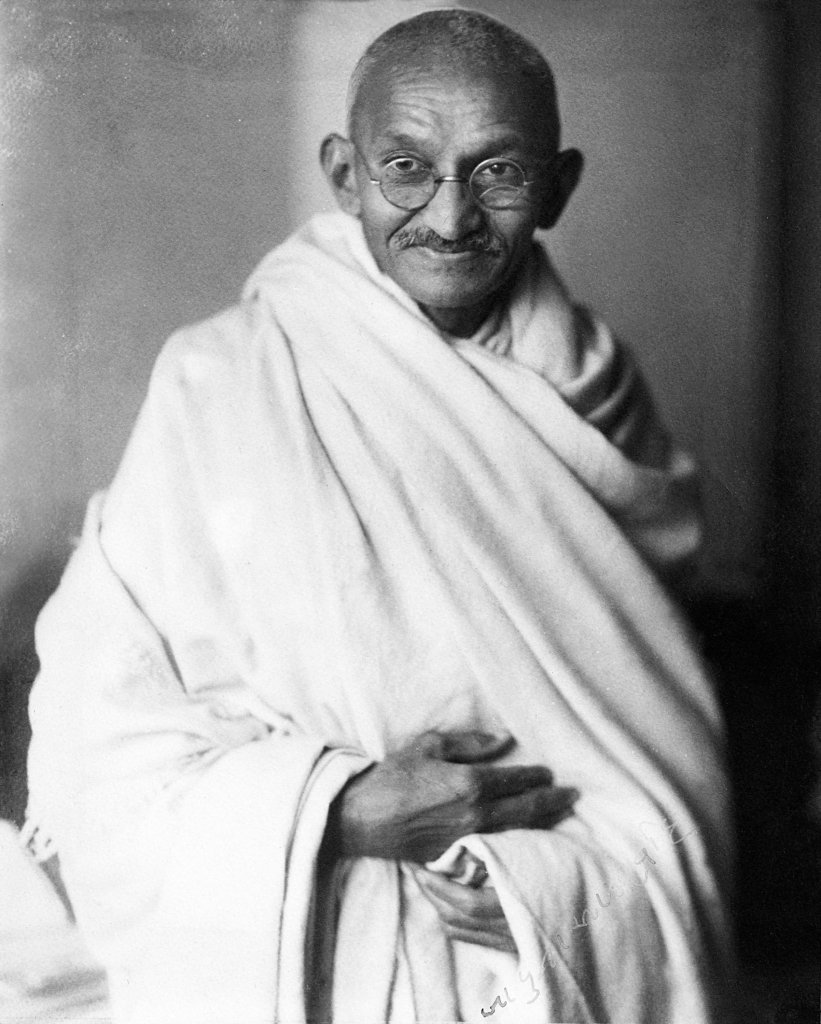
The first is Mahatma Gandhi. An Indian lawyer, he certainly was not what you would consider a physically intimidating fellow. In fact, to me he looks like someone’s friendly grandfather. What he seems to lack in physical strength, he more than makes up for in resolve and determination. After receiving his law degree he went on to fight for civil rights in not one, but two different countries. He did this using hunger strikes and other non-violent means. He was arrested several times in both his Native India as well as South Africa. He took on the British government to fight for the self rule of India. When this happened, the country split in two, divided on religious grounds. As you might imagine as people moved to settle in new locations there was much violence. Gandhi again used non-violent means to try and bring the people together. This was so successful that certain parties felt threatened and he was assassinated at the age of 78.
The second warrior I would like to mention is Fred Rogers. That is a picture of him and his wife above. Again, not someone you would fear meeting in a dark alley. Out of all the things that have been said about Fred Rogers, I would be confident to say this is the first time he has ever been referred to as a warrior. How can I call a soft-spoken host of a children’s television program a warrior? He is proof that you do not have to shout or threaten to get your point, and more important your feelings across. He used calming soft-spoken language to take on tough subjects such as anger, death and divorce and make them not only easy to understand, but less scary for young children. That takes a good deal of bravery to do. I have another more poignant example I would like to share with you.
On May 1st of 1969, Mr. Rogers went to face congress. You see earlier that year president Nixon wanted to slash funding for Public Television. Did Fred Rogers stand before congress to scream and fight against this budget cut? Fight? Yes. Scream? Not at all. Fred fought back using a completely different kind of tactic. He stood in front of one of the more stern congressman who would have not only been completely unmoved by shouting, but may have been even more inclined to cut funding. Instead, Fred discussed the importance of offering children a healthy alternative to the violence they regularly saw on television. He shared the benefits of providing them a safe place to express feelings and help deal with some of the scary things we mentioned above. He even demonstrated the benefit each child receives by sharing the lyrics to one of the songs from the children’s show. The result? The congressman said that it was the first time he had goosebumps in quite a while. After hearing what Fred had to say his reply? “Well I guess you earned that 20 million dollars” Fred had not only saved the program from being cut, but the funding was actually increased.
Here are two great men who took on governments, society, civil rights and came out on top. They owe their victories not to great campaigns of violence and oppression, but to the power of love, faith and a belief in what is right and the need to love one’s neighbor. There are many other great heroes and warriors that have taken nonviolent ways of fighting against the world’s problems. Are you one of them?
Today’s post is one of simple reassurance. If you subscribe to a blog like this, you are undoubtedly a person who is driven to learn and utilize secrets to an amazing life. It is worth noting and something we must be careful of when working to improve our lives, we must enjoy the process. This can be difficult to do during the best of times, but takes special care when we feel like we are failing or even moving backwards.
When we are trying to improve any aspect of our lives there comes a time when we face an obstacle or a set back. It can seem as if we are trying to push a giant marshmallow up a hill. Maybe we are doing our best to improve our physical fitness and we sustain and injury. After weeks of rest, going back to the gym and having to ‘start all over’ can be quite deflating. Perhaps we are working on completing our next book and accidentally hit ‘delete’ instead of ‘save’, wiping out weeks or more of work. (I did this once, it was followed by feeling of being nauseous) All of these moments can lead to doubt. What can doubt do? As Shakespeare said, “Our doubts are traitors and make us lose the good we oft might win by fearing to attempt.” There is a lot said in that one line, and all of it is true. Doubting ourselves can lead to giving up too soon or even failing to try.
Once returning from injury to the gym, I remarked how deflating it was to have to lower the weights so far from what they were prior to injuring myself. I was told something that not only applies to the gym, but to every other task in life – “You are still further ahead than everyone who is just sitting on the couch.” Unless your job is a professional couch tester, this is quite true. Were you supposed to write 1000 words and only could come up with 750? That is better than sitting on the couch (which is where I am writing this ironically) not writing anything.
Some days you may fail all together. What about those days? There are expected too. If you are striving to be your best, that is what counts. We often do not succeed at the level we wish to. We can use it for motivation to work harder the next day. We can recall days that we crushed it more than we expected and realize it all balances out in the end. We can also realize that we are going to have days that we try and fail and even a few where we fail to try. As long as they are the exceptions and not the rule, we should not be too hard on ourselves. Just make sure to get back up and kick butt again!
Even the casual follower of this blog, not to mention anyone who knows me personally, knows that I am a big fan of Mr. Rogers. A host of a children’s television program, but also a modern day teacher and philosopher who mastered the art of human fundamentals. That is to say he could break down the most complex subject so that children could understand. Divorce? He had a show for that. Senseless violence? He was able to talk to children about that. In doing so, he took subjects that were multi-layered and broke them down to the most basic aspect.
By doing this to benefit children, I think it had the unexpected result of benefiting adults as well. Just as a star athlete will practice the basic moves in which their sport is made of, we as adults must practice basic emotional and societal actions. There are steps such as finding a way to not only express our feelings in a healthy way, but allowing others to do the same that can make a huge impact on the world. Discovering what to do when you are mad. How to help yourself when you feel lonely. These are lessons that Mr. Rogers taught to children every day on his television show but that many of us have forgotten in this crazy work-a-day world.
The quotes in the two pictures I have featured represent 2 paths to changing the world. Sounds like a bold claim. Follow 2 quotes from a man who used to host a television show for children and we could change the world? Remember how an athlete becomes a star. They practice the fundamentals every day until they can do them without thinking. Let us get back to our human fundamentals. At a basic level all of humans have a great deal in common. We all want to be loved. We all want to be treated well. We all would like to be significant in some way. We want to feel like we make a difference.
Let us look at these two pieces of advice. The first one is to “offering, as a matter of course, just one kind word to another person.” He implores us to imagine what our real neighborhoods would be like. Can you imagine what your neighborhood would be like if everyone offered just one kind word to another person? If people walking around complimenting each other makes you think of a ‘neighborhood of make believe’, that should tell you how far we have strayed from human decency. How difficult is it to offer a person one kind word? How much effort does that take? Even offering them one kind thought. Is that really that difficult? Of course it isn’t. So why is it that imagining people doing that seems so far removed from reality? What can we do about it? We can let it start with us. When you see your neighbors share with them a kind thought or at least a kind word. Watch the difference it makes. Become that agent of change.
The second quote is a little more complex in both thought and words, but still something even a child could understand and certainly something an adult could do. It really breaks down into 2 sections. The first is, “To love someone is to strive to accept that person exactly the way he or she is, right here and now” A few things I would like to point out. First is the word strive. We may not always be successful in our attempts to accept those who are different than us. It takes a great amount of patience and compassion. Not only with the people who are different, but ourselves who may fail to do so. What is important is that we are striving to do so. If our intent is to love and accept our neighbor as they are, more often than not we will succeed in doing so. In the times we fail, we can apologize and even ask for their help in understanding. The second part is to “go on caring through the joyful times and through times that may bring us pain.” Right now a lot of people are experiencing pain and tough times. All of them for their own reasons. It may be difficult to understand what they are facing if we ourselves have not faced similar situations. It is for that reason it is so important that we go on caring for our neighbors.
It is the basic things that will allow us to become a united people. It is being loving and caring for each other. In this global world and economy that will live in, it is understand that we are all neighbors. We have the unique ability to affect people not only in our direct neighborhood, but in our world neighborhood as well. Will we use that power to divide or will we use it to show love to our neighbor and bring us closer together?




 SECRET 2 AN AMAZING LIFE