This is one of those reminders that we do not like to get. I recall, in my own life, how this hit home. Looking back, there were a lot of character issues I had. One day while reading a book about Theodore Roosevelt, it occurred to me that I really needed to work on me. For years I had been blaming my behavior on a host of different factors. None of which were the real cause. The real cause was me and the choices I was making at the time. It was the actions I was taking and those I did not take that I should have.
It was at that moment I realized I had to take ownership of my own life. This was at once both scary and liberating. Scary because I had to admit all my past behavior was my fault. Scary because I knew it was up to me to fix all of it. It was at the same time very liberating. When I stopped trying to blame other people and circumstances for my situation, it meant I also had the power to fix it. Different decisions could be made. Different actions taken, or not taken as the case may be.
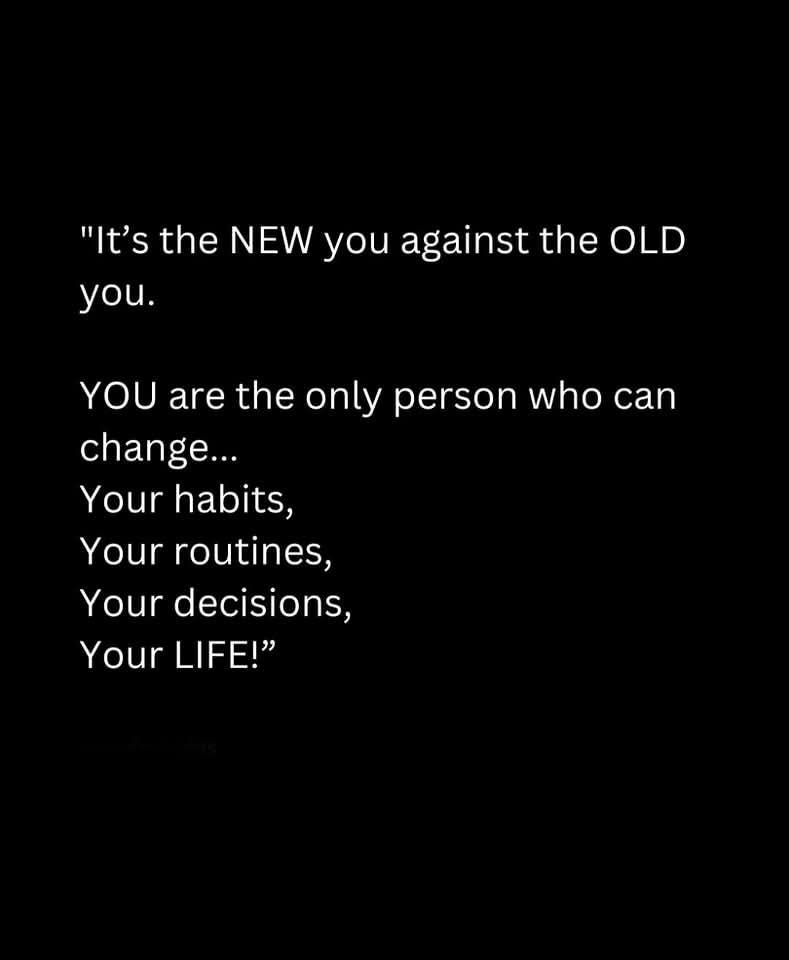
Some of you might be in the same situation. Your life is not all that you know it could be. It is far too easy to blame our upbringing, our grumpy boss, our controlling spouse or our seeming lack of opportunity. If you trace all of those circumstances back far enough, you will see that they have the same common denominator – you. Taking responsibility for your own life can be scary. As stated above, it can also be very liberating. It is up to you to change your habits, routines and decisions. Rest assured this will be a struggle. It will be tempting to fall back into old habits. The old version of you will not want you to change. It will take work and it will be a never-ending battle. By fighting that battle, you gain the ultimate freedom. That is control of your own life.
Here is a concept that many of us seem unable to grasp. In fact, the number of people fleeing from this great opportunity. The opportunity I am speaking of, is to claim responsibility for every situation in your life. Many people think the opportunity is to find someone else to blame. This may seem like the easy way out, but the opposite is actually true. If it is “someone else’s fault” then it is easy to shrug our shoulders and believe there is nothing we can do about it. Do you know what happens to improve our life when we believe there is nothing we can do about what is challenging us? Do you know what changes when we constantly believe that we are the victim? Not. A. Damn. Thing.
This point was driven home by reading the great book above. Extreme Ownership is a book that will allow you to better understand the power that comes with taking responsibility for every situation in your life. Circumstances may be beyond your control, but how you deal with them is not. When we are constantly blaming others and pointing our fingers, we are putting the keys to our life in their pocket. If we find ourselves saying things such as, “They made me mad.” We are admitting ‘They’ have control over our emotional well-being. If we say, “I chose to get upset over their actions.” That puts the onus right where it belongs, on our own doorstep figuratively speaking.
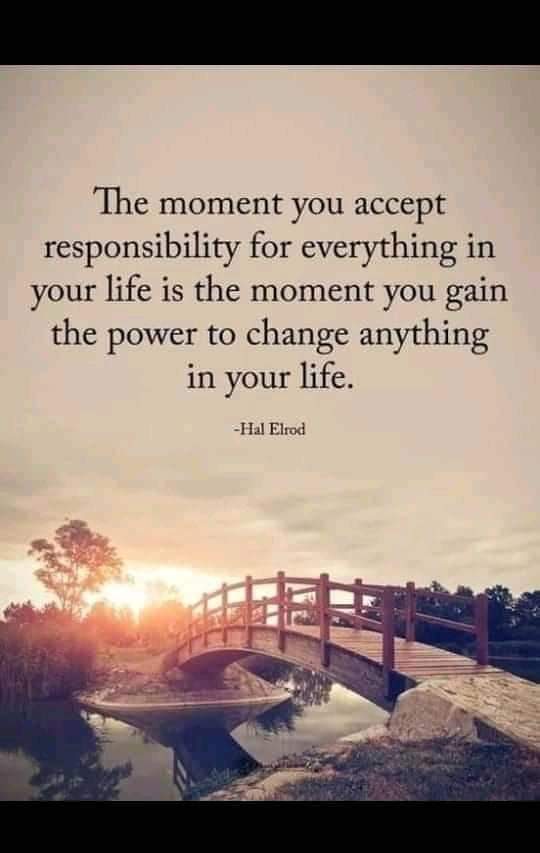
This is also where it will do the most good. When we take responsibility for something, then we have the power to change it. The more we take ownership for in our life, the more we can control. When we transfer the responsibility to others, we are left feeling helpless in our own lives. An interesting thing happens when we begin taking responsibility, we gain respect from others. Consider you are having a disagreement with another party. This could be a friend, a coworker or even your spouse. If they say (because we know you are more enlightened now) “It is your fault!” or point out everything you did wrong, how will that make you feel? Will you hold them in high esteem for bringing your faults to your attention? I am guessing the answer will be a hard ‘no’. Now, what if that same person said, “This is my fault. I could have handled this better.” Maybe they even go further to list what they did to contribute to the problem and promise to work on those things for next time? What would your opinion be of them now? What if you knew you did at least a little something that may have contributed to the problem yourself? I am guessing that despite feeling a great deal of angst for them in the moment, you could not help but respect their ownership of the problem.
One of my favorite ways this comes in handy is when we make mistakes. This also happens to be one of the most difficult times to use this. When we make a mistake, we already feel bad. It can be very tempting to look for circumstances beyond our control to blame it on. What does this do to other’s opinions of us? Does it increase their trust in us? Probably not. What about someone who stands up and admits their mistakes? Who displays ownership for them? This is someone you are likely to trust more. You know they will own, and learn from, the things they do wrong.
In your own life I recommend taking ownership over as much as you can. This may be a difficult for many of us, but it will lead to massive growth and a better life in the long run. To get a jump start on this, pick up your own copy of Extreme Ownership.
I would like to relay another story to you. This one also drove home a great point people may have a hard time grasping emotionally. Inside this story is the secret to an amazing life. It is a difficult and uncomfortable secret, but a powerful one. If you get the lesson in this story (don’t worry we will talk about it after) then you will have what you need to begin transforming your life starting today. I warn you, that you might not be ready to read this story. Although it will provide you the potential to positively impact your life, it will require a few things on your part. These are things that people may find difficult and uncomfortable. The payoff is that if you do make the sacrifice, you will have less stress and worry. You will also have a much greater feeling of control over your life. It will require you to be brutally honest with yourself. It will require you to get rid of your excuses and your ability to blame. In their place, you will need to take on a feeling of responsibility and accountability.
Are you ready? Here we go. A man goes to visit the doctor. The doctor inquires as to the nature of his ailments. The man goes on to describe a list of issues he seems to be having in his life. The doctor listens to the seemingly unrelated issues the man is having. After he has finished explaining everything that ails him, the doctor replies, “I need to write you several prescriptions.” He proceeds to scribble on a tablet of paper, rip the sheet off, and start on the next. He does this for 5 or 6 sheets. The man assumes he will be getting 5 or 6 medicines. The man asks for his prescriptions so he can be on his way. “Oh these are not for you.” The doctor replies. The man looks confused. “This one is for your mother-in-law. This other one is for your boss. This third one is for the rude person at the coffee shop.” He continues this for each of the medicines.
This story may strike you as crazy. How is this man ever going to get better if all of the treatments go to the other people in his life? Great question. How do we ever expect our lives to change when we are blaming and waiting for everyone else to change? If we truly want our lives to change, it is us who has to do the changing. Wayne Dyer once said, “When we change the way we look at things; the things we look at change.” This could not be more true. Some of you may argue, “Why do I have to change when it is my stupid boss who treats me unfair? He is the one that has to change!” Let me ask you this, whether it is your boss, your spouse or the driver who cut you off in traffic, while you wait for them to change, how is your own life improving? How long do you think you will have to wait until they change so your life can begin improving? My guess would be somewhere between a really long time and never.
This may make the situation seem hopeless, but that could not be further from the truth! When you stop blaming others and waiting for them to change, you take back control of your life. I will give you one tool and one strategy to start using today that has helped me and will definitely help you. First the tool. I recommend the book Extreme Ownership by Jocko Willink and Leif Babin. These two former Navy Seals show how they used extreme ownership to become great leaders in the world of combat. Which, I would guess, is far more intense than most of what we are going through. Pick yourself up a copy. Whether from Amazon or the public library.
Here is the strategy. This does not require you to read anything and you can begin to use it as soon as you finish reading this blog. I get this idea from Rhonda Byrne in one of her great books. I think it was The Power, but do not quote me on that. People who irritate you, vex you or cause some other unpleasantness in your life can be hard to put up with. I certainly have a few of my own. She recommends viewing them as ‘Personal Emotional Trainers’ or P.E.T.s. This gives you 2 distinct benefits. Frist, like a physical trainer, who pushes you when you feel you are on the brink of death, you know in the end you will be a stronger better person. I know after a hard workout, you do not usually feel like taking your trainer out for a cocktail. You might look at them wondering what kind of sadistic tendencies make people do that to other people. Maybe that is just me. You don’t say any of these things because you know their goal is to make you a better person. Guess what? Those annoying people you would be tempted to say something to? You just hired them as your trainers. In this case it is for your emotions and your behavior. When you may look at someone with anger or even road rage, just know they are your trainers. You don’t want to fail in front of your trainer. Not to mention, I think many of them get some sort of sick pleasure out of seeing that happen. Nope, you are going to thank them (Don’t worry you can do that part in your mind) and know they are making you an emotionally stronger and more resilient person.
I know I told you 2 benefits. I did not forget the second one. Although, that has been know to happen on occasion. Here is the best part. When you feel like your new personal emotional trainer may have pushed you a little too hard, remember the acronym – P.E.T. Just know they are your pet. When you think of a pet, is it like the cute little dog above? Maybe imagine walking that person on a lease through the park may make you feel better. Whatever works to help you take their negative behavior and let it turn you into a better person.



 SECRET 2 AN AMAZING LIFE