One of the things that is difficult for many of us is letting things go. This can be made even tougher when there seems to be no good explanation as to why something, or someone, hurt us. You can be thinking hours, days or weeks later, “Why did that happen?” Most of us have had someone say something hurtful to us that has left its mark. It pops up in our heads now and then and we can’t help but wonder, “Why did they say that?” I know I have been there. Perhaps you know why they said it. It could have been completely unfair and unjustified. That can make it even worse.
Do you know what is worse than staying upset? Realizing what we lost by being so. The picture above shows the temperature on my way to work the other morning. Mind you, this is in summer. Only a few days earlier, it was in the 80s. In this state, the weather can turn that quick. Life is much the same. While we are busy being mad or being stressed out ruining our ability to have a good time and enjoy life to the fullest, life is moving on. What do I mean by life is moving on? We are getting older. Those we love are getting older as well. The most common emotion I have seen displayed at funerals is regret. If only I had one more day with them. If only we had spent more time together. Have you ever heard yourself say things like this? Have you thought them to yourself?
See this pretty lady next to me? We occasionally get upset with each other. There is usually a pretty good reason when it does happen. In the heat of the moment we can lose touch with how beautiful it feels to be in love with each other. That is why we like to fix things and get back to loving as quickly as possible. Why is this important? Hourglass. Life is like the sand in an hourglass. It is always slowly draining away. The time we lost fighting is time we will never have back. Say we spend an hour mad at each other. If we are together for 20 more years, we still would have lost that hour of love we could have had. Here is the important bit, we do not know how long we have with each other. Hopefully it is long, but there is the chance it could end for one of us tomorrow. How would we feel if we would have spent 60 minutes of the time we had left mad?
Do not misunderstand me. There are reasons to be upset. You should not fake emotions or not communicate your unhappiness. That will only lead to more problems and resentment later on. The point here is that we should work diligently to discover ways to solve our problems and move on. We all have less time than we think. I do not recall hearing of anyone who looked back on their life and said, “I sure am glad I spent that time being upset.” That is why self-improvement is so important. Becoming our best version of ourselves will allow us to experience more of the joy life has to offer in however much time we have left.
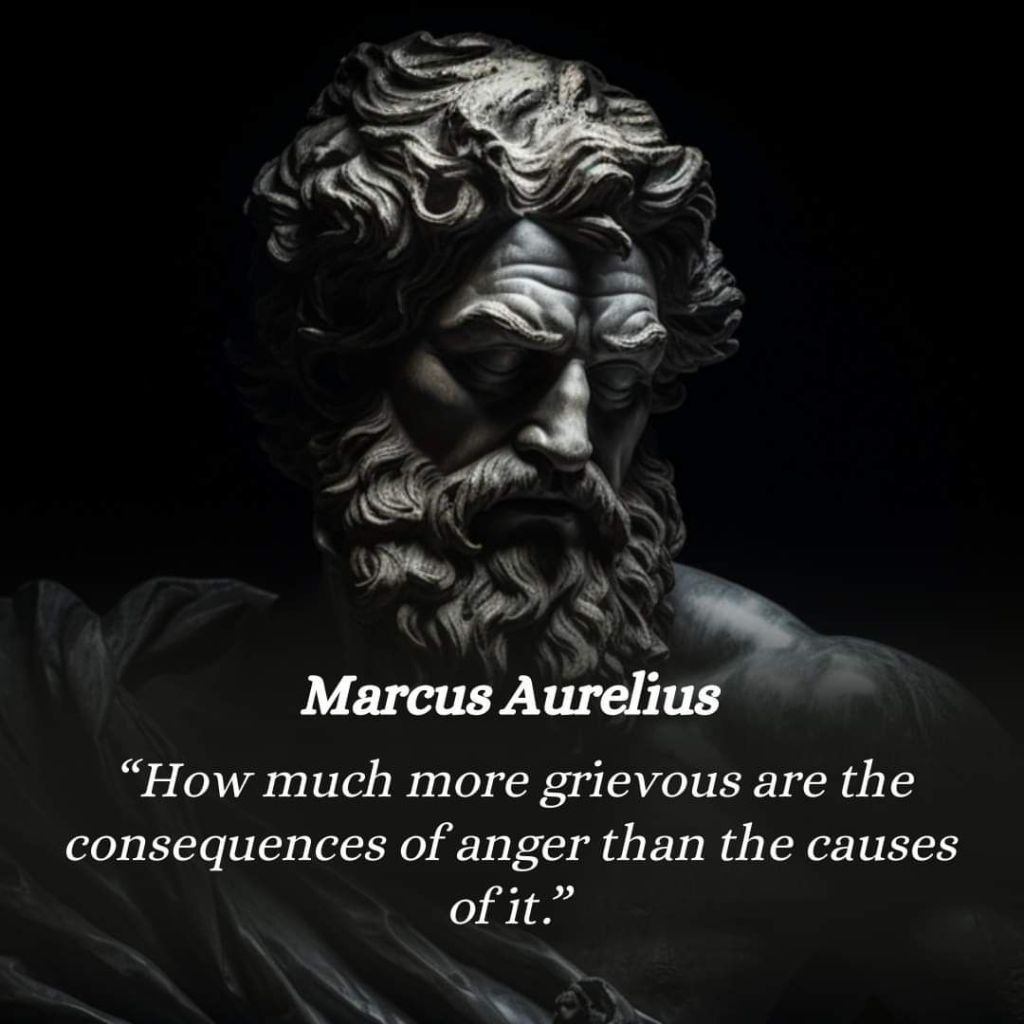
Anger sucks. Feeling anger causes many poor physical symptoms. High blood pressure, depressed immune system, and impaired judgment. Can you imagine how maintaining these for any length of time could affect you? There are some people who live an angry lifestyle. Continuous high blood pressure can…well…kill you. That certainly is not envious. Short of killing you, there are many other bad options from high blood pressure. I will let you research that on your own. A constantly depressed immune system means you will suffer many more colds and illnesses. You will miss more work and not be as productive in general.
What is worse than anger? When you let someone else’s anger make you angry. It is like trying to put out a fire by throwing gasoline on it. If we are being honest, it can really be difficult to not get angry when someone is yelling at us. When we do, however, we fall victim to the three conditions mentioned above. We did not even mention the impaired judgement. Sure, what someone did to anger us is most certainly terrible. When we respond from that state of anger, the chances that it will be a good response is slim to none.
Work on mastering your emotional control and your response to anger. When you do become angry, realize your ability to judge the situation objectively is seriously compromised. Learning how to get yourself out of anger quickly will reduce the chances of having to deal with the consequences of choices made from a poor emotional state.
Here is something that is simple to understand, but far from easy to do. That is not to let outside circumstances and people control your emotions. This is more difficult the closer the people are to you. The more they mean to you, the more emotional reaction they can cause you to experience. That is, only if you let them. I am not advocating you become an unfeeling zombie. Far from it. What I am advocating is to not only control, but choose what emotions you feel.
If you are one of the 95% of people who go through life without taking a look inwards, this concept that you have any control of your emotions may seem foreign to you. Here is the truth. What you feel depends on the meaning you assign to someone’s behavior or words. If a stranger walks up and tells you they do not like you, it may bother you but beyond that you will go about your day. If a good friend tells you the same thing, it has a far greater impact. The emotion you choose in response to that will dictate your behavior, which will go a long way to deciding the fate of not only that interaction, but the life of the friendship.
This becomes even more difficult when the person’s behavior is down right disrespectful. Even then, you have the option, as Sun Tzu so plainly put it, to respond intelligently. You may ask what some man named after a star has anything to do with your life. Sun Tzu wrote the amazing book, The Art of War. It not only has timeless advice for military combat, but can be applied to your business and personal life as well.
When you pause and choose how to respond to a situation, you take control of that situation. In the case of our friend telling us they do not like us, we can choose several ways to respond. We can be defensive and inform them that we no longer like them. We may even go on to list their faults and how we feel we are better than them. That is responding from a place of hurt and anger. It will not only do little to solve the original complaint our friend may have, we have now widened the chasm between our hearts. If we are interested in maintaining this friendship, it would serve us far better to respond with a genuine caring and inquisitive question about what made our friend change their mind about our relation. We not only may preserve the friendship, we may also make room for it to grow and become closer. As an added bonus, we may learn something about ourselves.
I am not a fool to think that this is an easy process. I still struggle with it on occasion as well. What we must understand is that when we allow someone to affect us emotionally, we, in effect, become their servant and they become our master. We relinquish control of the situation and the repercussions that will result. A far wiser and more intelligent response would be to consider what outcome you wish for the situation. Another question to ask yourself is the effects of the negative emotions on our mental and physical well-being worth handing over control to our emotions? As I said in the beginning of this post, it is not easy. We need tools and strategies, many of which can be found in the articles on this website, to help us gain control. The price we will pay to do that will be well worth it.
It can be so frustrating when you are doing your best to live a calmer and more loving life and people do their best to challenge that. You can bite your tongue one time, but the next time you just remember how much it hurt. Not only that, but people can be so thoughtless and really push us. You may even ask yourself, “What is the point of trying to resist acting on my anger when I can’t do it all of the time?” That is a fair question. One, every time that you do manage to do it, you end up with less hurt feelings on the other side and less to apologize for later. As the picture above says, you are also working on rewiring your brain.
If you take the same path in the woods everyday, and then you choose to change it up for a week, the second path will not be nearly as worn in as the first. Similarly, if you have been a slave to your emotions for years of your life, and now you are trying to take control of them, the path in your brain for reaction will be a lot more worn in than the one for intelligently responding. It takes practice and, on occasion, we may slip and go down the more familiar path. Give yourself some compassion. It takes a long time to rewire a house. Can you imagine rewiring a machine with over 86 billion connections? That is how many neurons are in the average brain. They make up our ‘wiring’.
Doing your best to rewire 86 billion connections not enough motivation for you? Think of this – those people disturbing your peace would love to see you lose control. In fact, sometimes that is all they are after. By maintaining control and responding instead of reacting will infuriate them like nothing else. Done enough times and they might give up trying to upset you all together. What if you fail and let them get to you? Just remember, they may have won the battle, but the war is still yours to win. Use that feeling of frustration and failure to motivate you to keep control next time. As the picture above says, “Someone out there is holding their breath waiting for you to fail. Make sure they suffocate.” You don’t actually want to kill anyone, but killing off their desire to upset you would certainly help you live a more calm and peaceful life.
Keep doing your best to resist giving into anger. You are not at the mercy of your emotions, you are their master. That does not mean you should turn into a cold and unfeeling person. It means you should learn how to use and channel every emotion you experience. Both the good and the seemingly bad. I used the word seemingly because you can use them as well. Have a lot of anger? Go to the gym and get a great workout in. Feeling sad or down? Use that to reach out and connect with friends. Feeling lonely? Perhaps you could make friends with a stranger who could also use some company. Feel your emotions, just remember to master them as well.
In this crazy world, I have learned lots of lessons. This has become accelerated the older I get. That is a lesson itself. People generally go one of two ways when they get older. They become more rigid, or stuck in their ways, or they realize that they ‘don’t know what they don’t know’. I am fortunate enough to fall into the latter category. The older I get, the more open and compassionate I have become. Going through challenges in life can make you hard or allow you to relate to others in a deeper and more meaningful way.
One of the greatest lessons I have learned through everything is the importance of remaining calm. Extreme emotions can be beneficial. They can give us a boost of energy when we need it. Extreme fear can heighten our senses to keep us safe. More often than not, extreme emotions are a negative. They drain us of valuable energy and deplete our immune systems. Yes, you may get a boost of adrenaline at first, but it comes with a price eventually. When we are in the whirlwind of emotion, it can cloud our judgement and we may make decisions we will regret. Things that seem like the right thing to say or do when we are angry, sad, depressed or a host of other intense emotions, can have us asking for forgiveness for years after.
The quote above is some great advice. Decisions that could affect you long-term are best not made in an extreme emotional state. Why? When you act impulsively, you are transferring control of your decisions from your logical mind, to your irrational emotions. When you are able to stay calm, it is almost like being able to look down on a situation from above. When you act emotionally, it is like looking out from inside a whirlwind. You may not have all of the information to make the best decision. Even if you do, you may not be taking it into consideration.
I am not going to be foolish enough to tell you that staying calm in the middle of an emotional decision is easy. It is not. It takes a good strategy and a lot of practice. What is a good strategy for staying calm? That varies as much as the individual. You can try deep breathing, counting to ten, picturing something that makes you laugh. Whatever works for you. There is plenty of books and research on the topic I invite you to investigate on your own. What I can tell you is that developing the ability to stay calm is worth all of the effort. Staying calm is not only a talent, it is a rare and valuable talent. It allows you to maintain control when others lose it. It saves you the stress and heartache of regret over something you said or did that you should not have. One more thing that staying calm requires is patience with yourself. This is not a talent that will come all at one. No matter how much you study and practice methods on your own, it will be a lot different when you have to put them into practice.
My advice is to invest some time and energy into developing the ability to stay calm. It will not only give you the ability to objectively approach challenges in life, but will save your relationships much of the pain you will inflict by acting emotionally. Invest time in discovering strategies for staying calm. Invest time in practicing them. Your relationships will thank you. Your stress level will thank you. Your life will thank you.
The Marx Brothers are one of my favorite comedy groups to watch. This band of brothers always had a million laughs a minute. Often, it takes watching their movies 3 or 4 times to catch all of the humor. This quote from the leader of the merry bunch really had me thinking. A few posts ago, we spoke about how to maintain your positive vibes around people that are difficult to get along with. If you haven’t read that one yet, I highly recommend you go back and do so. Yet, there are more than just negative people that can get you down. We are going to talk about how to deal with many different challenges today. Oddly enough, they all have a very similar solution.
Groucho lets us in on a key aspect to remaining happy – control. When we let someone, as we discussed in the post previously mentioned, or something get us sad, upset or any other emotion we do not wish to feel, we are giving that person or thing control over us. We are giving that person or thing the ability to dictate to us our own emotional well-being. If we stop and think about this, it is very easy to understand emotionally. In practice, however, it can be quite difficult to manage emotionally. We get upset. We get down and sometimes end up in a sort of emotional funk. It happens to me. It happens to all of us. The secret to an amazing life is not to expect to eliminate these experiences all together. We are human and on occasion our emotions will get the best of us. I still get in a funk. This time of year, with the cold weather and lack of sunshine, it is always a possibility. The secret to living an amazing life is to reduce both the frequency that these moments occur as well as their intensity.
Above is another powerful thought. Happiness is a choice. It is not always an easy end, but in order to get to that end, we have to chose to make that our destination. I opened my very first book, A Happy Life for Busy People, with this quote from Abraham Lincoln, “People are about as happy as they make their minds up to be.” If you decide that a happy life is important to you, settling for anything less will not do. True, you will still get down as we discussed, but when you are feeling that way, you will still know that happiness is where you are determined to be. Noticed I said determined not would like to be, or prefer to be. What do we do when we are determined to live in a state of happiness and inner peace and the world seems to have the exact opposite idea? We get to work!
Another great quote from Mr. Lincoln. If we are responsible for our own happiness, and we want to be in control of our own emotional well-being, what do we do when things get us down? That is a great question. I recommend starting by appreciating what those feelings are telling us. There are often great lessons to be learned in times of pain. If all we do is try to ‘deny’ our own emotions, not only will we miss the great lessons we could learn from them, but they are likely to return with a vengeance. If you are feeling sad, angry, lost, lonely or any other emotion, my first suggestion is to ask yourself why you are feeling that way. Let us say you are reeling from the loss of a loved one. You should not admonish yourself for feeling bad. Losing someone you care about can be one of the most difficult things we experience. Realize that in order to feel great loss, we must have been fortunate to feel great love. That is a blessing that not everyone has. We also had the great opportunity to share many amazing memories with that person. Our life, and our heart, will forever have a hole where that person used to be.
Now, after we have honored and discovered our emotions, which can take as long as we need it to, it is time to get to work. Begin by asking ourselves what the lesson we can get from life in regards to this tragic event. Could it be to make sure we treasure every moment with people we have in our lives? It could be that we need to take more pictures, make more memories and share more with each other while we can. How about to live and love without regret? After we have mined our negative emotions for the lessons they can teach us, it is time to put those lessons into action. Reach out to someone we have been meaning to. Plan and create memories with those we love. Make sure we are not so busy earning a living that we forget to create a life. As we take these actions, we can feel grateful for the lessons and reminders that the negative emotions have given us. That can take some time, but in the end, I think we can honestly come to terms with them.
In order to return our heart to a state of inner peace and joy, it make take utilizing some other tools. Many of these can be found in my second book, Living the Dream, but we are going to mention a few here. You could get together with family or friends to watch a funny movie (like the Marx brothers), we could listen to songs off our happy playlist. We can spend some time in one of our favorite spots in nature. I cannot stress enough how creating a list of things that bring us joy BEFORE we experience an emotional challenge is so important. When we find ourselves in a negative state, it can be next to impossible to think of things that bring us joy. I am sure you can all relate. Having such a list handy can literally be a life-saver in some cases.
We used the example of losing a loved one in this post because that is about the most difficult situation any of us can face. The same strategy can work if we are facing the end of a job, the end of a relationship or even just a morning commute filled with drivers who seem to being ‘using the force’ instead of watching the road. Discovering the true source and reason for our emotions, finding the lessons contained within them and then taking actions to learn from them and return our hearts to joy will work in all of these. It will also allow US to have control over OUR emotions instead of putting the key to them in someone else’s pocket. Do you want to have control over your own happiness, or would you rather let someone else control you?




 SECRET 2 AN AMAZING LIFE